
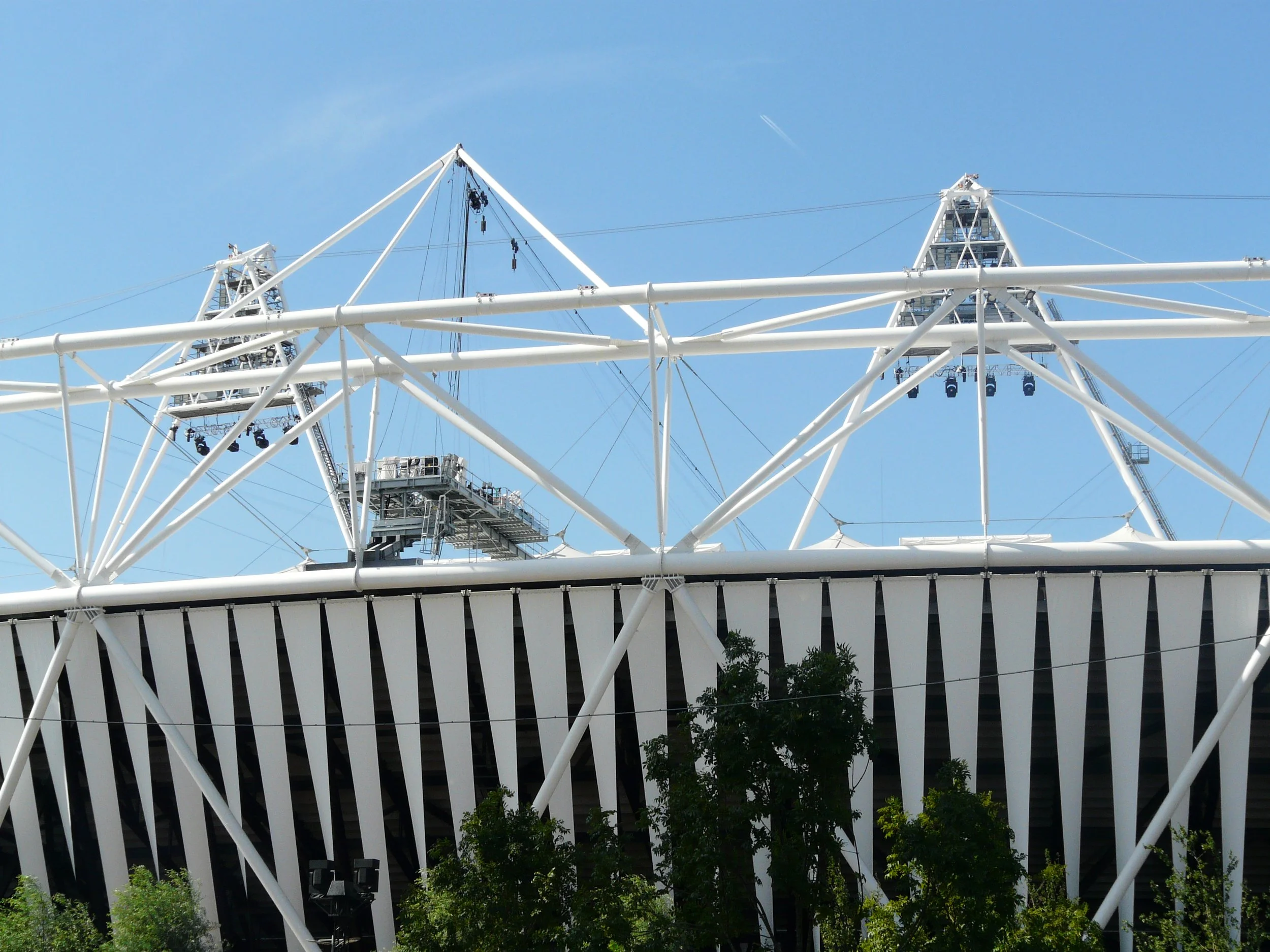
When the London 2012 delegation presented its bid to host the 2012 Olympic and Paralympic Games, their vision was to use the power of the Games to inspire lasting change. Part of that vision for lasting change was the claim that Great Britain would hold the world’s first truly sustainable games. With a wholly non-negotiable deadline, the eyes of the world upon them, the interests of hundreds of stakeholder groups voiced, and the scrutiny of an international media ever present, we thought our client might find their own inspiration and gain alternative perspectives on the execution and operationalization of mega-projects in very challenging environments by meeting with key members of the Olympic Delivery Authority leadership team and its business partners. So one year prior to the Games we headed off with our client to Stratford to do just that.
Alison Nimmo has that quiet, understated confidence found in only the most capable of leaders, yet usually ones that profess an undying fear of failure no matter how great their achievements. As Director of Design & Regeneration she led the masterplanning, design, planning and sustainability work for the key venues of the London 2012 Olympic and Paralympic Games. If the task of transforming the heart of East London and turning an industrial wasteland into Europe’s largest urban park for 150 years wasn’t daunting enough – a project twice the size of Heathrow’s Terminal 5 in half the time – the organisers’ pledge to deliver the ‘first sustainable games’ surely was.
Before construction could even begin, the Olympic Delivery Authority had to undertake the most extensive and sustainable clean-up operation ever seen in the UK. 220 buildings across the site would need to be cleared; 1.5 million cubic metres of soil – enough to fill Wembley Stadium eight times over – would need to be excavated, where necessary ‘laundered’ to remove waste and carcinogens and then used to shape the new landscape; 90% of materials generated from demolition within the Olympic Park would need to be prepared for reuse or recycling; 140 archaeological sites would need to be accommodated; over 20 unexploded ordinance from World War II air raids would need to be safely detonated or defused; 2,000 newts would need to be relocated!
Alison explained, “We took 2 years to acquire the land, 4 years to build the venues and infrastructure and now we have 1 year for test events prior to the games. There has been incredibly strict version control and sign-off of briefs. We’ve been working to the same programme for the last 7 years. We spent a lot of time developing the programme and plan, and then the CEO stuck it on his wall and said ‘this will not change’.
The same 8 Directors reporting to CEO Paul Deighton had been in position right from the very beginning, with many working on the bid process itself. To have a stable team for that period of time is unusual, but there was no doubt that there was credibility and confidence in the top team, great leadership and good chemistry.
We had brought along two teams from the Resources industry – one comprising Project Directors, the other Operational Leads – to see what they could learn about the disciplines required in the delivery of massive projects to a fixed budget and unmoveable deadline – July 27th 2012, the opening of the 30th Olympiad of the modern era. The Project Directors’ responsibilities exactly mirrored those of the ODA while the Operations Leads’ responsibilities paralleled those of the London Organising Committee of the Olympic Games, the group responsible for staging the games. What they each really wanted to learn was how their two groups could work more effectively together and rally to common objectives, while still delivering on some extraordinarily challenging sustainability targets.
The scale of the challenge was almost overwhelming, but then we were reminded of the numerous other infrastructure projects and venues outside of the Olympic Park, as well as the huge number of stakeholders – residents of the 6 London boroughs, relocated businesses, local and national government, sporting authorities, suppliers and media – that needed to be managed.
“The ODA is co-located with LOCOG,” continued Alison, “and it’s clear that we are judged on the success of the whole. The UK was coming off the back of some supposedly poor projects such as the Millenium Wheel, the ‘wobbly’ Millenium Bridge and the white elephant of the Millenium Dome. It’s clear there had been some poor phasing and testing. We’re all really bad as humans at learning lessons and we all think we can do better. We took some time to look at the Terminal 5 build at Heathrow, and BA and BAA were really generous with their time.” Interestingly, they also took some time to learn from the build of Disneyland Paris.
“We learned a lot during the bid for the Olympics and we wanted to do something different but at the same time learn from the best. Munich and Barcelona have been the main inspirations, and Sydney worked with us on the bid; they’ve been a great critical friend and at times brutally honest. We have had to focus on saying no to many of the nice-to-haves. I’d sum it up as being about excellence without extravagance. There’s just no way we could out-build Beijing.”
“Things have been very, very dynamic and we found ourselves to be not always that good at reviewing and then being light on our feet. One thing we did do is produce just one report for all stakeholders with some very, very honest reporting, which has saved us a lot of problems.”
And there it was, a simple articulation of the culture they had established from the outset – one of transparency with stakeholders, discipline in planning, a willingness to learn from others and to solicit feedback.
We met with many extraordinary people that day, all of whom had leading roles in implementing rigorous disciplines and innovative practices into the safest UK construction project ever. One year later, IOD President Jacques Rogge would declare the Games of the 30th Olympiad a ‘happy and glorious Games’. All of us who met with Alison and her colleagues that day left the Olympic Park confident that it would be so and, as it transpired in our debrief meeting, most importantly the teams had learned an enormous amount about the practices inherent in any successful project of this kind and embarked on their own objective of becoming a learning organisation.